Ever want to watch a movie from the internet onto your family TV? Now there is a new technology allowing people to watch videos, movies, or view pictures on their TV as opposed to huddling around the computer. The box has Component slots along with regular AV, and S-Video. It may also be connected to the internet with a built in ethernet port. Looking to utilize the HD feature on many home Televisions the sage has a HDMI port in addition to the other inputs. The box supports video, photos, Mp3 formated music, and WMA format. This feature is most widely known to be used to make your TV compatible with netflix's new instantly on tv feature.
http://www.pcmag.com/article2/0,2817,2342724,00.asp?kc=PCRSS02129TX1K0000530
Tuesday, March 10, 2009

Wednesday, February 25, 2009
Touch Computer
This new computer comes as a coffee table. This coffee table has a screen in which it can sense multiple touches at once so you can do multiple actions at the same time. Because of this function, this touch screen computer beats the mouse any day. Underneath this computer are infrared detectors that can detect any object put on the table. It also can connect to wireless devices such as cameras or phones and send information from one device to another without plugging anything in.
Wednesday, February 11, 2009
Zumbox
E-mail has been emerging ever since it came out, well now with Zumbox, every house in America will be able to have their own e-mail, and by house I really do mean house, just like regular mail. Zumbox is a new e-mail system that creates a residential email system for every home in the U.S. The general idea of Zumbox was for companies to be able to send all their bills, notifications etc, but virtually! Some companies have already began to use this service and are sending it to their customers, even if the customers haven't signed up for an account yet, the mail will be held until the customer signs up. Signing up is free as well, the only catch is commercial mail, Zumbox charges 5 cents per junk mail, and will allow the company to send mail to an entire building or to everyone within a certain radius. The bright side though is that the junk, well, special offers section, get a whole separate category. Overall sounds like a good idea, and its a great way to go green! The private company has over 4 million dollars and will "expand their runway when they need too."
SOURCE:
http://news.cnet.com/8301-17939_109-10163247-2.html?tag=newsEditorsPicksArea.0
SOURCE:
http://news.cnet.com/8301-17939_109-10163247-2.html?tag=newsEditorsPicksArea.0
Monday, February 2, 2009
Due Dates for 3rd quarter blog posts and comments (midnight of the date listed):
Andrew Bregman: Post due: Wed 2/11 Comments due: Wed 2/25
Andrew Yoon: Post due: Wed 2/25 Comments due: Wed 3/4
Justin Snow: Post due: Wed 3/4 Comments due: Wed 3/11
Mark Briganti: Post due: Wed 3/11 Comments due: Wed 3/18
Grishma Patel: Post due: Wed 3/18 Comments due: Wed 3/25
Ray Beckley: Post due: Wed 3/25 Comments due: Wed 4/1
Jordan Smith: Post due: Wed 4/1 Comments due:FRIDAY 4/3 (end of quarter)
Friday, January 16, 2009
Surgical Laser Scalpel
Recent advances in Laser Scalpel technology have made it possible to target individual cells without harming any surrounding tissue. Before this advancement laser scalpels could only be so precise because the heat coming from the laser would actually damage surrounding tissue. This increased precision is made possible by the use of extremely fast light pulses that don't take enough time to hurt the surrounding area. The latest development is not so much the technology itself but the work of rocket scientist Adela Ben-Yakar who was able to shrink the technology to make it possible to work inside humans for surgery. This new technology will undoubtedly help in recovery periods after surgery considering there will be less damage.
http://www.wired.com/medtech/health/magazine/16-12/st_microscalpel
http://www.wired.com/medtech/health/magazine/16-12/st_microscalpel
Thursday, January 15, 2009
The search continues, scientist are still looking for new and inexpensive ways to deliver insulin into the blood stream is one important avenue for tackling the diabetes epidemic that is sweeping our nation and the world. The preferred option for many patients would be an insulin pill taken orally. But studies have long shown that insulin is easily broken down by the digestive system and that any surviving hormone is not easily absorbed into the bloodstream from the gut. An insulin inhaler made it as far as the US market in 2006, but was withdrawn a year later because it wasn't cost effective. rodents got their new treatment in liquid form, "but chewing gum would be a better delivery method in humans" said "the team" Chewing would ensure a plentiful supply of saliva, providing the protein needed for the insulin to make its way into the bloodstream.therefore this is something that i wold invest in as new and upcoming thing

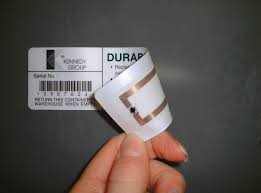

Radio frequency identification ("RFID") is a technology that uses radio waves to identify things. An RFID system includes three elements a tag, a reader, and a database. An RFID tag comprises a chip that contains a unique number that identifies an object.
The simplest RFID tags are "passive" and they do not carry their own power supply to enable data transmission. Passive tags receive their power from the electromagnetic waves. Other tags like "active" do contain some form of power supply allowing the broadcast of information to the reader. Active tags are often able to transmit over a much longer range than passive tags like about 100 feet or more.
RFID technology can be mainly used for keep track of objects, keep track of people, to provide services, or as an internal component of a product or device.
RFID technology could be used in wal-mart as clipped tags instead of bar codes, it can be used in hospitals for the newborn babies, it can be used in an ambulance to locate the a patient, it can be used to find a criminal, and much more. But RFID can be dangerous in privacy concerns. RFID can be found in a person's credit cards, clothing, EZ-pass, and it can also can be found in a humans body. This RFID is able to find your location, personally identifiable information, and most of all, it can track you. So now you have be careful and make sure that RFID is not attached to you.
http://www.cdt.org/privacy/20060501rfid-best-practices.php
http://rfidprivacy.mit.edu/access/who.html
Subscribe to:
Posts (Atom)