Recent advances in Laser Scalpel technology have made it possible to target individual cells without harming any surrounding tissue. Before this advancement laser scalpels could only be so precise because the heat coming from the laser would actually damage surrounding tissue. This increased precision is made possible by the use of extremely fast light pulses that don't take enough time to hurt the surrounding area. The latest development is not so much the technology itself but the work of rocket scientist Adela Ben-Yakar who was able to shrink the technology to make it possible to work inside humans for surgery. This new technology will undoubtedly help in recovery periods after surgery considering there will be less damage.
http://www.wired.com/medtech/health/magazine/16-12/st_microscalpel
Friday, January 16, 2009

Thursday, January 15, 2009
The search continues, scientist are still looking for new and inexpensive ways to deliver insulin into the blood stream is one important avenue for tackling the diabetes epidemic that is sweeping our nation and the world. The preferred option for many patients would be an insulin pill taken orally. But studies have long shown that insulin is easily broken down by the digestive system and that any surviving hormone is not easily absorbed into the bloodstream from the gut. An insulin inhaler made it as far as the US market in 2006, but was withdrawn a year later because it wasn't cost effective. rodents got their new treatment in liquid form, "but chewing gum would be a better delivery method in humans" said "the team" Chewing would ensure a plentiful supply of saliva, providing the protein needed for the insulin to make its way into the bloodstream.therefore this is something that i wold invest in as new and upcoming thing

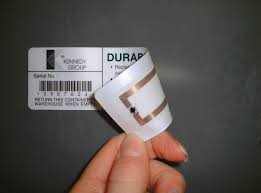

Radio frequency identification ("RFID") is a technology that uses radio waves to identify things. An RFID system includes three elements a tag, a reader, and a database. An RFID tag comprises a chip that contains a unique number that identifies an object.
The simplest RFID tags are "passive" and they do not carry their own power supply to enable data transmission. Passive tags receive their power from the electromagnetic waves. Other tags like "active" do contain some form of power supply allowing the broadcast of information to the reader. Active tags are often able to transmit over a much longer range than passive tags like about 100 feet or more.
RFID technology can be mainly used for keep track of objects, keep track of people, to provide services, or as an internal component of a product or device.
RFID technology could be used in wal-mart as clipped tags instead of bar codes, it can be used in hospitals for the newborn babies, it can be used in an ambulance to locate the a patient, it can be used to find a criminal, and much more. But RFID can be dangerous in privacy concerns. RFID can be found in a person's credit cards, clothing, EZ-pass, and it can also can be found in a humans body. This RFID is able to find your location, personally identifiable information, and most of all, it can track you. So now you have be careful and make sure that RFID is not attached to you.
http://www.cdt.org/privacy/20060501rfid-best-practices.php
http://rfidprivacy.mit.edu/access/who.html
Tuesday, December 16, 2008
Pico Projector

Optima has produced a "Pico Projector," which is small enough to fit in your pocket. Being the first of this kind one person claims it to be the invention of the year. Perfect for dull moments to take it out and attach you ipod or iphone and listen to music or watch music videos. The optima is compatible with normal RCA cords along with USB. This new creation will create great ease for many impromptu situations. Many companies caught on to this new hot item and many variations have been created. Although the resolution is not "High Definition," it proves to be very strong. You must also consider that it stays in your pocket. All this is available to the public now for under 130 dollars.
http://www.engadget.com/2008/11/04/optoma-pico-projector-gets-pictured-specced-and-priced/
Thursday, December 4, 2008
Efficient Thin-Film Solar Cells

Scientists at MIT have just recently created more efficient ways to capture sunlight within thin-film solar cells. These solar cells are made of a new kind of silicon which are much more efficient and cost less. This new prototype combines a highly effective reflector on the back of a solar cell with an antireflective coating on the front. By adding silicon to these new types of solar cells, they can capture sunlight and produce electricity up to 15% more than the regular commercial cells. On modern solar cells each are backed with a metal layer which reflects light. Scientists backed surface of a silicon solar cell to make it so that it can capture and reflect sunlight. Scientists etch a series of ridges and troughs where on top they deposit a photonic crystal. The crystals make the light stay inside the cell longer increasing the chance of changing it into electricity. This new prototype can hopefully create enough electricity to where we now longer need power plants. This can help decrease the amount of pollution and decrease the effects of global warming.
Tuesday, November 11, 2008
Cancer nanobombs
Cancer is a serious problem and is hard to cure. Doctors usually use chemotherapy to get rid of some tumors that might spread throughout the body. Even if chemotherapy was to get rid of the tumors in the body there still would be major side effects.
Balaji Panchapakesan at the University of Delaware figured out a less risky way to get rid of tumors. He came up with the idea of Cancer Nanobombs. Cancer Nanobombs are tiny carbonNanotubes filled with water, which are injected into the area with the tumor. Then a laser light is zapped into the area causing the water inside the Nanotube to boil thus causing the Nanobombs to explode and kill any nearby cells.
Sure the Nanobombs will kill other cells along with the tumor cell but its better than the side effects of chemo.
sited: http://www.newscientist.com/article/dn16002-invention-cancer-nanobomb.html
Thursday, November 6, 2008
Subscribe to:
Posts (Atom)